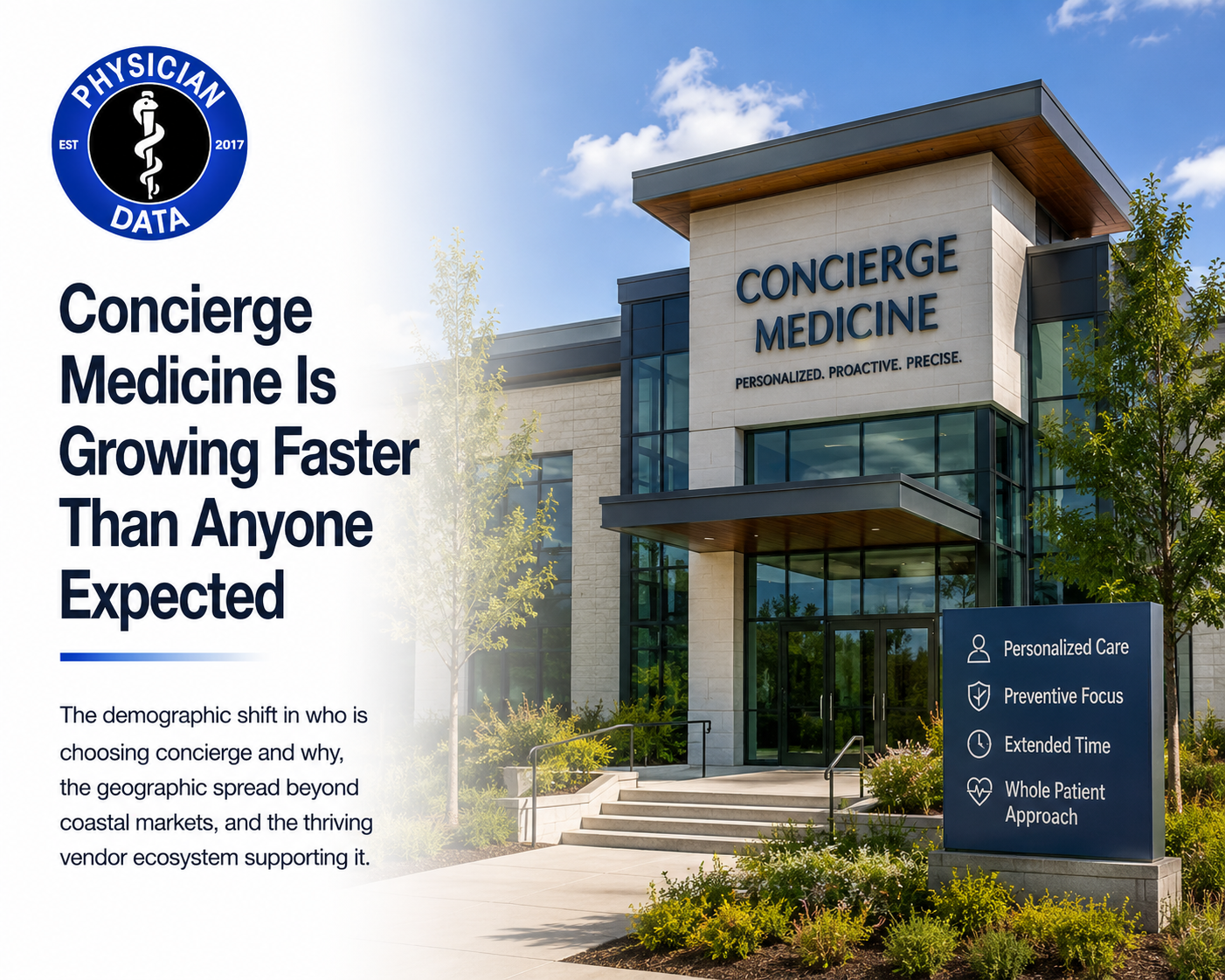


When concierge medicine first gained mainstream attention in the early 2000s, it was easy to dismiss as a luxury product for a luxury market -- a small number of wealthy patients paying retainer fees for the privilege of direct physician access, while the rest of the healthcare system carried on as before. The criticism was not entirely unfair at the time. The earliest concierge practices did skew toward affluent urban markets, and the model's detractors had a reasonable point about the equity implications of physicians withdrawing from the standard insurance-based system to serve a smaller, wealthier patient panel.
That critique has become significantly less accurate as the concierge medicine market has matured, diversified, and grown at a pace that most healthcare industry observers did not anticipate. The number of concierge and direct primary care practices in the United States has grown substantially over the past decade. The geography of adoption has expanded well beyond the coastal urban markets where it started. The physician demographic adopting the model has shifted in ways that tell a different and more interesting story than the original luxury-medicine narrative. And the vendor ecosystem supporting concierge and membership medicine has evolved from a handful of niche platforms into a genuine and growing market serving thousands of practices with real technology needs.
The most significant shift in the concierge medicine landscape over the past five years is in who is adopting the model. The physician choosing concierge medicine in 2026 is less likely to be motivated by access to wealthy clientele and more likely to be motivated by something more fundamental: the desire to practice medicine the way they went to medical school believing medicine was supposed to be practiced.
Physician burnout data has been alarming for several years. Studies consistently find that more than 50 percent of physicians report experiencing burnout symptoms, and the drivers are consistent across specialties and practice settings: administrative burden, documentation requirements, inadequate time with patients, loss of autonomy in clinical decision-making, and the general sense that the systems governing healthcare practice have become obstacles to the actual work of caring for patients. Concierge medicine, for the physicians choosing it, is a direct and practical response to all of these drivers simultaneously.
A concierge practice with 300 to 600 patients instead of 2,000 to 2,500 changes everything about the practice of medicine. The physician has time for 45-minute appointments instead of 12-minute ones. They can return patient messages personally rather than routing everything through a triage system. They can practice genuine preventive medicine -- actually helping patients change behaviors before disease develops rather than managing chronic conditions that might have been prevented with more time and more relationship. For many of the physicians choosing concierge, the model is not about money. It is about getting back to why they became physicians in the first place.
The geographic spread of concierge medicine adoption is one of the most significant and least-discussed dimensions of the market's recent growth. The model has moved meaningfully beyond its coastal urban origin story into suburban, mid-sized city, and in some cases genuinely rural markets, driven partly by the same telehealth infrastructure development that has expanded remote care access broadly and partly by the growing recognition that the membership model can be financially viable at lower price points than the high-end concierge practices that defined the early market.
Hybrid concierge models -- where a physician maintains some insurance-based patients alongside a membership panel, or where a group practice offers a concierge tier within a larger mixed-model practice -- have expanded access to the model for physicians who want the clinical and relationship benefits of a smaller panel without the financial risk of a complete transition to a membership-only model. These hybrid approaches are growing fastest in markets where the patient demographics make a fully membership-based model financially uncertain but where the physician burnout driving concierge adoption is just as acute as in wealthier markets.
The parallel to the direct primary care market documented in Physician Data's research on DPC as a distinct practice model is direct and worth understanding clearly. Concierge medicine and direct primary care are related but distinct models: concierge practices typically maintain insurance billing for services beyond the retainer scope, while direct primary care operates entirely outside insurance for primary care services. Both are membership-based, both feature smaller panels and longer visit times, and both are growing for the same underlying reasons -- physician burnout and the desire to practice medicine with more time, more autonomy, and more meaningful patient relationships. The technology needs of the two models overlap significantly, which means vendors serving one are frequently well-positioned to serve the other.
The billing infrastructure for a concierge practice is fundamentally different from the claims-based billing of standard insurance-based medicine, and it is substantially more complex than it might appear from the outside. Membership fee structures vary enormously -- monthly versus annual, individual versus family, tiered by age or service scope, with or without a separate insurance billing layer for services outside the retainer. The platforms that manage this complexity -- handling recurring payment processing, membership tier administration, renewal workflows, and the financial reporting that allows a concierge practice to understand its recurring revenue at any moment -- are the foundational technology for the concierge practice model and a category that most mainstream healthcare practice management software was never designed to support.
The concierge value proposition is built on accessibility and relationship -- the physician who responds to messages directly, who knows the patient as a whole person rather than as a chief complaint, and who provides the kind of continuity of care that a 2,500-patient panel makes impossible. The technology enabling this -- secure direct messaging platforms, patient-accessible scheduling with real physician availability rather than a call center, and the communication workflow tools that allow a concierge physician to maintain genuine ongoing relationships with a panel of several hundred patients without drowning in administrative overhead -- is a distinct and growing category from the standard patient portal technology built for insurance-based primary care.
One of the most compelling and most distinctive aspects of the concierge model is the genuine ability to practice preventive medicine that insurance-based primary care rarely has time for. Concierge physicians are doing comprehensive annual wellness evaluations, detailed metabolic and cardiovascular risk assessments, personalized nutrition and lifestyle coaching, and the kind of longitudinal health monitoring that prevents the chronic diseases that consume so much of the downstream healthcare system's resources. The technology platforms supporting this preventive care work -- wellness program management, biometric tracking integration, personalized health plan development, and the outcome monitoring that demonstrates the value of preventive investment -- are a growing and enthusiastic purchasing market within the concierge practice segment.
The concierge practice growth connects to the broader wellness and preventive health investment documented across the healthcare market. The same physicians choosing concierge because they want to practice genuine preventive medicine are frequently interested in the integrative and functional medicine tools, the advanced diagnostics, and the lifestyle medicine platforms documented in Physician Data's research on the independent practice technology stack. The vendor serving a concierge practice's membership management needs is often well-positioned to also serve their preventive care program and their enhanced diagnostic needs -- a multi-product relationship opportunity that does not exist in the same form with insurance-based primary care practices.
The concierge and direct primary care growth has an interesting parallel in higher education. The community colleges building genuine employer partnership and career outcome infrastructure documented in College Data's research on the community college renaissance are, in a meaningful sense, doing the same thing that concierge physicians are doing: choosing to build a smaller, deeper, higher-quality relationship with a specific population rather than competing on volume and throughput. Both are rejecting the throughput model in favor of a relationship model, and both are producing outcomes that the throughput model cannot match. And the student engagement work documented in K12 Data's research on the districts that cracked engagement follows the same logic -- smaller learning communities, deeper relationships, more individual attention, better outcomes. The relationship model is winning across sectors.
• Add concierge medicine and hybrid concierge as distinct practice model classifications in your physician mailing list, separate from general primary care and from direct primary care, because the billing model, technology stack, and patient relationship approach differ meaningfully across all three.
• Segment by panel size as a proxy for practice model -- a primary care physician with a documented panel of under 800 patients is almost certainly practicing in some form of membership or concierge model, even if they do not use that label externally.
• Map concierge medicine association and network membership as a contact multiplier -- the American Academy of Private Physicians and state-level concierge medicine associations provide event, network, and media access to concentrated populations of concierge physicians.
• Identify hybrid concierge practices at standard primary care groups as a growing and underserved segment -- these are practices that have added a membership tier to an existing insurance-based model, and they are frequently in active evaluation for the membership management technology that their standard practice management software does not support.
Concierge medicine has grown from a luxury curiosity to a genuine mainstream practice option, attracting a demographic of physicians who are not seeking wealthy patients so much as they are seeking the kind of medicine they originally trained to practice. The growth has been faster than most observers predicted, the geographic spread broader than the original market suggested, and the physician demographic adopting the model more representative and more motivated than the early luxury-care criticism acknowledged. The vendor ecosystem serving this growth -- membership management, enhanced patient communication, preventive care infrastructure -- is expanding alongside it, and the physician mailing lists that have mapped concierge and hybrid concierge as distinct purchasing categories are reaching a market that is genuinely thriving.
K12 Data -- Build a List | Pricing | Blog College Data -- Build a List | Pricing | Blog Physician Data -- Build a List | Blog Civic Data -- Build a List | Blog K12 Talent -- Post a Job | Search Jobs | Blog




 0
0
POST A COMMENT