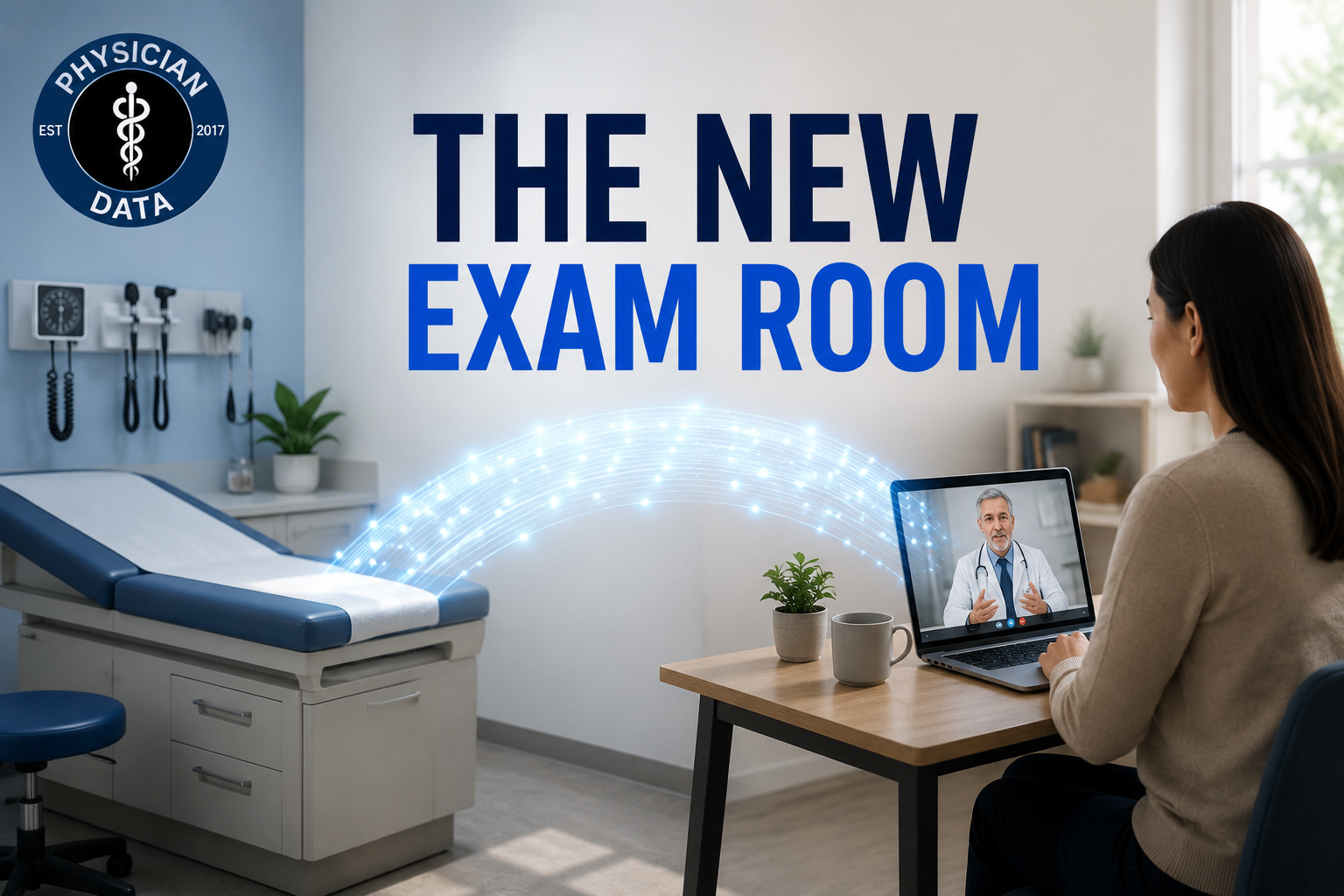


In 2019, telehealth visits in the United States numbered approximately 840,000. In 2020, they numbered 52 million. That is not a trend. That is a market transformation compressed into a single calendar year by a once-in-a-generation external shock that forced the healthcare system to adopt a technology it had been debating for two decades in a matter of weeks.
The initial surge has settled. Telehealth visits stabilized at roughly 25 million annually by 2022 and have remained at that elevated level since. The pandemic-driven peak will not return, but neither will the pre-pandemic floor. What has remained is something more important than the volume numbers suggest: a permanent shift in patient expectations about how and where care is delivered, and a corresponding permanent shift in the clinical operations infrastructure that healthcare organizations need to manage a patient population that now expects hybrid access as a standard feature rather than an exceptional accommodation.
The clinical technology market serving this hybrid care model is still being built. The platforms, tools, and workflows that allow a clinical organization to manage patients seamlessly across in-person and virtual touchpoints -- without the friction, the duplicate data entry, the scheduling complexity, and the care continuity gaps that characterized the early telehealth deployment -- are in active evaluation at health systems, physician groups, and specialty practices across the country. And the administrators driving those evaluations have job titles that most physician mailing lists and healthcare email lists were not built to find.
The early narrative around telehealth framed it as a technology adoption question: would physicians and patients use video visits if they were available? The pandemic answered that question definitively. The more interesting and more consequential question -- which the healthcare technology market is still working through -- is what happens to clinical operations, care quality, and technology infrastructure when roughly 15 percent of all primary care and behavioral health visits are happening on a platform that was not designed to integrate with the rest of the clinical workflow.
Hybrid care is not simply telehealth added to an existing in-person practice. It is a fundamentally different operational model that requires different scheduling systems, different patient communication workflows, different documentation processes, and different clinical protocols for determining which patients and which clinical situations are appropriate for virtual care versus in-person evaluation. A practice that runs hybrid care well -- where the transition between modalities is seamless from the patient's perspective and invisible in the EHR record -- has made operational investments in integration, workflow design, and staff training that go far beyond purchasing a telehealth platform.
The technology purchasing this operational complexity generates is spread across a wider set of product categories than the initial telehealth adoption wave. Asynchronous care platforms that allow patients to submit symptoms, photos, and structured intake information for physician review without a synchronous visit -- capturing clinical situations that do not need real-time interaction. Remote patient monitoring integration that connects wearable device data and home monitoring equipment to the EHR in ways that make it actionable in clinical workflow rather than stored in a siloed data repository. Digital front door technology that unifies patient access across scheduling, intake, triage, and care navigation into a single patient-facing experience that works consistently regardless of whether the patient's next interaction is virtual or in-person.
The purchase conversations for hybrid care technology -- asynchronous care platforms, remote monitoring integration, digital front door technology, and the clinical workflow tools that manage hybrid care operations -- are not being driven by the same contacts that drove the initial telehealth adoption wave. The emergency telehealth deployments of 2020 were largely decided by CMOs and IT leadership under urgency conditions that bypassed normal evaluation processes. The deliberate, strategic hybrid care technology investments of 2025 and 2026 are being evaluated by a new contact tier.
The Director of Digital Health is a role that has appeared at health systems and large group practices that have made hybrid care a defined service line rather than an operational afterthought. This administrator is responsible for the clinical and operational strategy of the organization's virtual care offering -- which platforms serve which patient populations, how virtual visits integrate with in-person care episodes, what remote monitoring protocols apply to which chronic condition management programs, and how the technology infrastructure supports both clinical quality and patient experience goals. They have dedicated budgets for digital health technology and direct purchasing authority for the platforms and tools that make hybrid care work at scale. Most physician mailing lists compiled before 2022 do not include this title as a distinct contact category.
The CMO at a health system or large group practice that has formalized its hybrid care strategy is a more active technology purchaser than the traditional CMO role implied. The clinical quality, patient safety, and care continuity questions that hybrid care raises -- which patients are appropriate for virtual visits, how do you ensure clinical decision-making quality when the physician cannot conduct a physical examination, how do you manage care transitions between virtual and in-person encounters -- are CMO-level questions that require CMO-level involvement in the technology decisions that address them. Healthcare email lists that map the CMO as a clinical governance contact rather than a technology purchasing contact are missing the sponsoring executive for the most significant clinical technology decisions in the hybrid care market.
Remote patient monitoring is the hybrid care technology category most directly connected to population health management. Patients with diabetes, heart failure, COPD, hypertension, and other chronic conditions that require ongoing monitoring between clinical encounters are the primary population for whom remote monitoring changes clinical outcomes rather than simply improving convenience. The Population Health Director or Chronic Disease Management Lead is the clinical contact who evaluates remote monitoring platforms based on patient outcome data, protocol design, and integration with population health management workflows. They are almost entirely absent from standard physician mailing lists built around clinical specialty and practice type rather than administrative function.
Asynchronous care platforms are the fastest-growing telehealth-adjacent category in 2026. The synchronous video visit -- which requires both patient and clinician to be available at the same scheduled moment -- addresses the minority of telehealth use cases efficiently and the majority awkwardly. Asynchronous care platforms allow patients to submit structured clinical information and receive a clinical response within a defined window, matching the operational model to the clinical need rather than forcing synchronous interaction for clinical situations that do not require it. Dermatology, behavioral health check-ins, medication management, and chronic disease monitoring are all clinical contexts where asynchronous care platforms are demonstrating better patient experience and equivalent or better clinical outcomes than synchronous video visits.
Remote patient monitoring integration is the category where the gap between technology availability and operational adoption is largest and where the purchasing urgency is highest. Most health systems and large group practices have some remote monitoring capability. The operational challenge is not the monitoring hardware -- it is the workflow integration that makes monitored data clinically actionable. A blood pressure cuff that transmits readings to a data repository that nobody reviews is not a clinical intervention. A system that flags readings outside defined parameters, routes alerts to the appropriate clinical contact, generates documentation in the EHR, and triggers a clinical response protocol is. The integration layer between monitoring hardware and clinical workflow is the active purchasing conversation.
The rural healthcare dimension of remote monitoring purchasing is particularly significant. Rural health clinics and federally qualified health centers that are absorbing patients from rural hospital closures -- documented in Physician Data's research on the rural hospital closure wave -- are the organizations with the most acute need for remote monitoring infrastructure. A small clinical team managing a geographically dispersed patient population with high chronic disease burden cannot safely manage those patients through quarterly in-person visits alone. Remote monitoring technology is a clinical safety tool for these organizations, not an enhancement to an existing care model. The purchasing urgency is immediate and the budget implications are supported by HRSA grant funding that creates compliance deadlines alongside purchasing authority.
Digital front door technology -- the patient access and engagement layer that manages scheduling, intake, triage, pre-visit data collection, and post-visit follow-up across both virtual and in-person touchpoints -- is a purchasing category that sits at the intersection of IT, clinical operations, and patient experience. The technology evaluation involves the Director of Digital Health, the IT Director, the Patient Experience Officer, and in many organizations the CMO as clinical quality sponsor. The multi-stakeholder buying committee for digital front door technology requires healthcare contact databases that map all of these contacts at the same health system account rather than treating each as an independent contact.
The government healthcare funding connection matters for this market. State Medicaid programs have expanded telehealth coverage significantly since 2020, and the administrative technology that manages Medicaid telehealth billing, prior authorization, and outcome reporting is a purchasing category that spans healthcare and government simultaneously. Civic Data's research on state Medicaid officials and government healthcare funding documents how state Medicaid Medical Directors and state health officials are co-evaluators for the same telehealth compliance technology that health systems are purchasing from the delivery side -- creating a cross-sector vendor opportunity for organizations with both physician mailing lists and civic mailing lists.
• Add Director of Digital Health and Virtual Care as a primary, distinct contact category. This role holds purchasing authority for the full stack of hybrid care technology and is absent from most physician contact databases compiled before it became a standard health system administrative function.
• Map Population Health Directors and Chronic Disease Management Leads as clinical co-evaluators for remote monitoring technology. These contacts set the clinical protocols that determine which monitoring platforms serve which patient populations -- a co-evaluation role that physician mailing lists built around specialty and practice type cannot capture.
• Segment by telehealth program maturity. Health systems and practices with formalized hybrid care programs -- dedicated digital health leadership, defined clinical protocols for virtual care, integrated remote monitoring programs -- are in the most active evaluation mode for the second-generation hybrid care technology that goes beyond the initial telehealth platform deployment.
• Include the government healthcare funding layer. State Medicaid telehealth coverage determinations and HRSA grant programs for rural health technology are creating co-purchasing conversations that require civic mailing lists alongside physician contact databases to reach both the clinical delivery organization and the government funding authority simultaneously.
• Track health system digital health strategy announcements. Formal announcements of digital health program launches, virtual care service line expansions, and remote monitoring program rollouts are signals that the institution is in or approaching an active technology evaluation cycle for hybrid care infrastructure.
The telehealth wave of 2020 was not a temporary disruption to healthcare delivery that has since returned to normal. It was a permanent acceleration of a transition that was already underway, producing a hybrid care model that is now the operational baseline for the healthcare system rather than an experimental feature. The clinical technology market serving that hybrid care model -- asynchronous care platforms, remote monitoring integration, digital front door technology, and the workflow tools that manage care across virtual and in-person touchpoints -- is still being built, still being evaluated, and still generating active purchasing at health systems, physician groups, and specialty practices across the country.
The vendors whose physician mailing lists and healthcare email databases reach Directors of Digital Health, Population Health Directors, and CMOs with hybrid care portfolios are competing in that purchasing market. The ones still routing hybrid care technology outreach through traditional clinical specialty contacts and hospital department listings are missing the administrative layer where hybrid care technology decisions are actually made.
K12 Data -- Build a List | Pricing | Blog College Data -- Build a List | Pricing | Blog Physician Data -- Build a List | Blog Civic Data -- Build a List | Blog K12 Talent -- Post a Job | Search Jobs | Blog




 0
0
POST A COMMENT