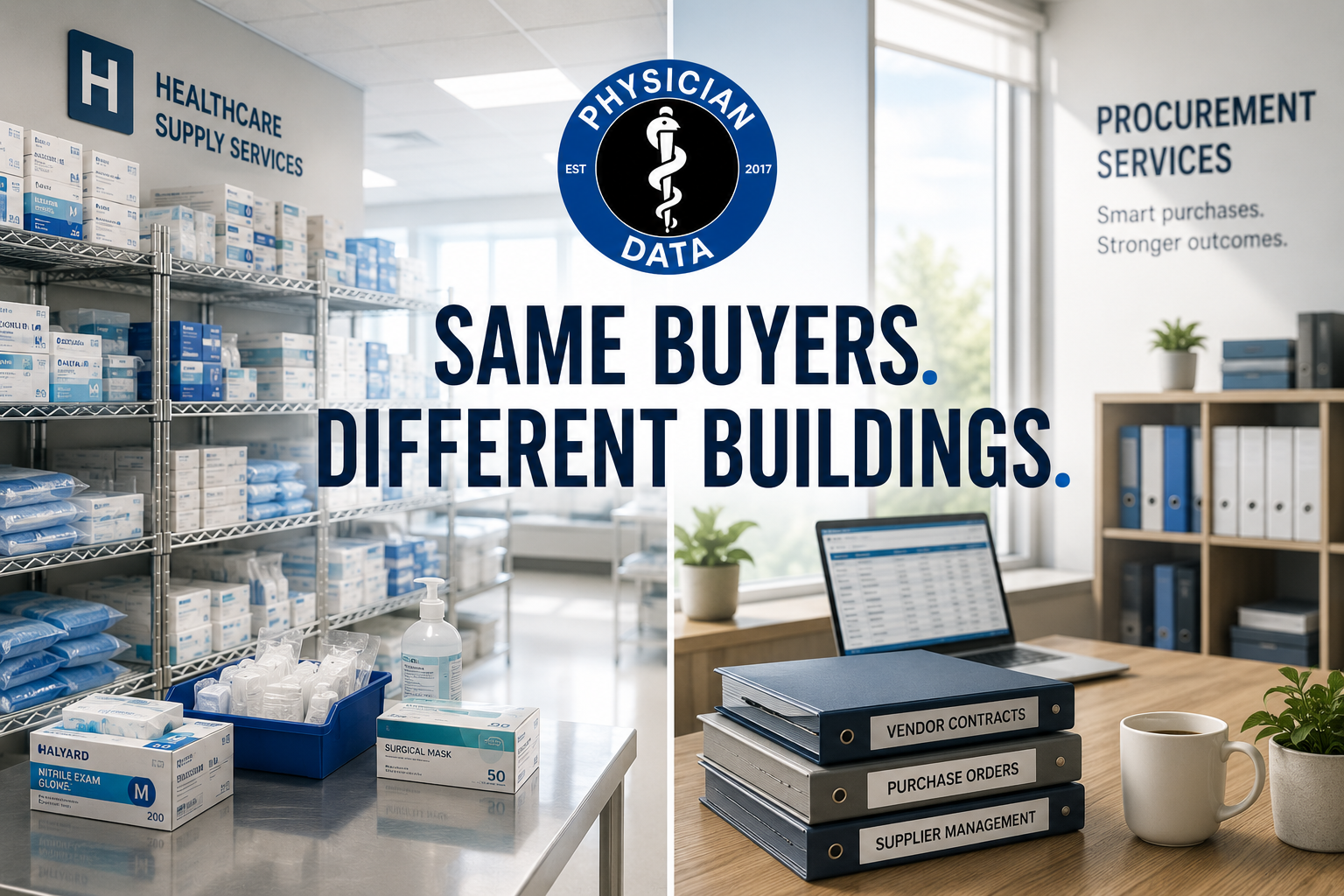


Group purchasing organizations have become one of the most important and most underappreciated forces shaping how independent physician practices buy supplies, equipment, and increasingly technology. A GPO aggregates the purchasing volume of thousands of independent practices that would individually have no leverage to negotiate the volume-based pricing that large health systems take for granted, and converts that aggregated volume into pricing power that can close 15 to 30 percent of the cost gap between independent practice purchasing and health-system-scale purchasing.
What is less widely recognized, even among vendors who sell into both markets, is that education procurement runs on the exact same economic logic through cooperative purchasing vehicles -- and that the strategic implications for vendors are nearly identical across both sectors.
The fundamental problem GPOs solve in healthcare is the same fundamental problem cooperative purchasing vehicles solve in education: a large number of individually small purchasing entities -- independent physician practices in one case, school districts and colleges in the other -- each lack the volume to negotiate competitive pricing or to run an efficient, fully competitive procurement process for every individual purchase. Aggregating that purchasing power, either through a formal GPO or through cooperative purchasing vehicles like NASPO ValuePoint, Sourcewell, and E&I Cooperative Services, lets the small entity access pricing and procurement efficiency that would otherwise only be available to the largest players in the market.
For vendors, both structures create the same strategic opportunity: get your product or service onto the aggregated purchasing vehicle once, and you gain access to thousands of individual buying entities without having to win each one through an individual competitive procurement process. A medical device company that secures placement on a major GPO contract has effectively pre-sold itself to every independent practice that participates in that GPO. A technology vendor that secures placement on a major cooperative purchasing contract has effectively pre-sold itself to every school district or college that participates in that purchasing vehicle.
This is the same dynamic documented from the education side in Civic Data's research on cooperative purchasing strategy for GovTech vendors, and it connects directly to the K-12 and higher education procurement environment that vendors selling into K12 Data and College Data contact lists are already operating inside. A vendor with a strong GPO relationship strategy in healthcare already has the conceptual playbook for winning the equivalent cooperative purchasing relationship in education -- the negotiation logic, the volume commitment structure, and the long-term relationship management approach all transfer directly.
The GPO wave in healthcare has accelerated specifically because of the independent practice survival dynamic documented elsewhere in this content series. Independent physician ownership has fallen from roughly 60 percent to under 30 percent of all physicians over the past fifteen years, driven by reimbursement pressure, administrative burden, and capital requirements that favor consolidation. The independent practices that have made a deliberate decision to remain independent are using GPO membership as one of the core technology and purchasing strategies that neutralizes the scale disadvantage that drives their peers toward selling to a health system or private equity acquirer.
Practices that have joined well-structured GPOs are reporting supply and equipment cost reductions of 15 to 30 percent relative to purchasing independently at list price. That margin improvement is frequently the difference between an independent practice that struggles financially and one that comfortably sustains its independence -- which means GPO membership is not a minor operational efficiency. It is, for a meaningful share of independent practices, a survival strategy.
School districts and colleges are facing an almost identical structural pressure, for almost identical reasons. Smaller districts and smaller institutions individually lack the purchasing volume to negotiate the pricing that large districts and large university systems can command directly. Cooperative purchasing vehicles solve this the same way GPOs solve it for independent physician practices -- by aggregating volume across thousands of participating entities to create pricing leverage no individual small district or college could access alone.
The financial pressure driving adoption is also strikingly similar. Just as independent physician practices facing reimbursement and administrative cost pressure are turning to GPOs as a survival strategy, school districts navigating the ESSER funding cliff and colleges navigating enrollment and FAFSA-driven financial stress are turning to cooperative purchasing vehicles as a way to stretch increasingly constrained budgets further. The institutions under the most financial pressure are, in both sectors, the ones most actively expanding their use of aggregated purchasing structures.
A vendor that has built genuine expertise in GPO relationship management for healthcare has already built most of the strategic and relational skill set needed to succeed in cooperative purchasing for education. The negotiation dynamics are similar. The long sales cycle to secure initial placement on the purchasing vehicle, followed by a much faster sales cycle to individual buying entities once that placement exists, is identical in structure. And the underlying account targeting logic -- identify the buying entities under the most financial pressure, because they are the ones most actively seeking the cost efficiency that aggregated purchasing provides -- transfers directly.
For vendors who already sell into both healthcare and education, or who are considering expanding from one into the other, this parallel is a genuine strategic shortcut. The cooperative purchasing relationship-building skills documented in healthcare GPO strategy map almost directly onto the cooperative purchasing strategy needed to win placement on the vehicles serving the school districts in K12 Data and the colleges and universities in College Data. A vendor who has never sold into education but has a mature GPO strategy in healthcare is closer to being education-procurement-ready than they likely realize.
• Segment your physician mailing list by GPO membership status as a market signal -- practices that have recently joined or expanded GPO relationships are demonstrating active investment in cost-efficiency strategies and are likely candidates for adjacent vendor categories.
• If your company sells into both healthcare and education, build explicit cross-training between your GPO relationship team and any team pursuing cooperative purchasing placement in education -- the skill sets transfer directly and most companies are not taking advantage of that overlap.
• Prioritize independent practices and small-to-mid-size school districts and colleges simultaneously as the segment most actively seeking aggregated purchasing relationships right now, because both populations are under comparable financial pressure driving comparable purchasing behavior.
Group purchasing organizations in healthcare and cooperative purchasing vehicles in education are not just superficially similar. They are the same economic structure solving the same underlying problem for two different sectors facing comparable financial pressure. Vendors who recognize this parallel -- and who actively connect their healthcare GPO strategy to an education cooperative purchasing strategy using K12 Data and College Data alongside their physician contact data -- are positioned to win in both sectors with a single, transferable playbook rather than building two unrelated strategies from scratch.
K12 Data -- Build a List | Pricing | Blog College Data -- Build a List | Pricing | Blog Physician Data -- Build a List | Blog Civic Data -- Build a List | Blog K12 Talent -- Post a Job | Search Jobs | Blog




 0
0
POST A COMMENT