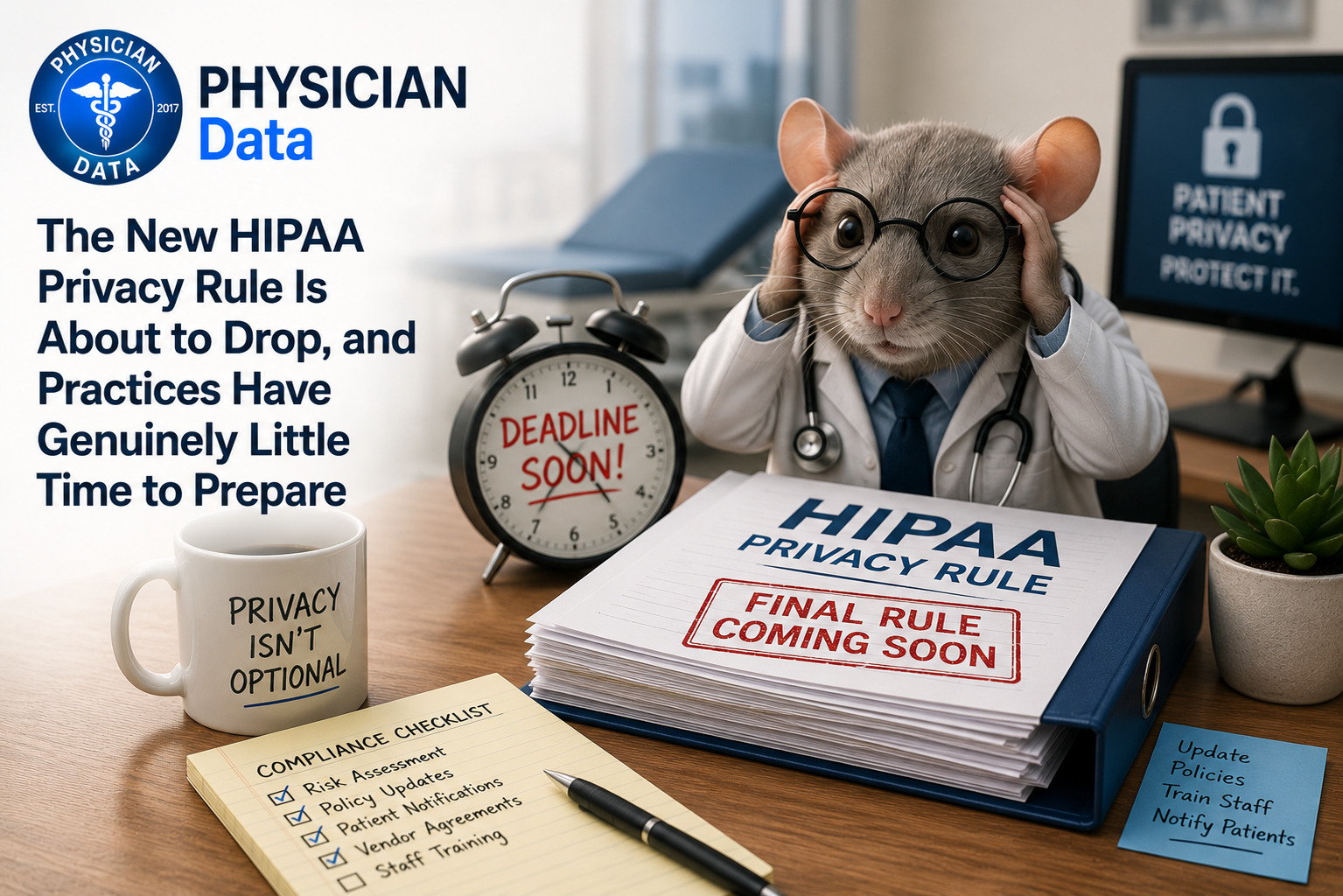


Practices tracking healthcare compliance deadlines need to understand a genuinely near-term timeline shift: the HIPAA Privacy Rule's final rule is expected in August 2026, while the related HIPAA Security Rule will not be final until July 2027. This staggered timeline means practices face a compressed window to understand and implement Privacy Rule changes specifically, without the benefit of the longer runway the Security Rule's later deadline provides.
For practice compliance officers and administrators, this is not a distant planning consideration. It is an active, near-term deadline requiring genuine attention now, before the rule's specific requirements are even fully public.
Practices have grown accustomed to major HIPAA regulatory changes arriving with considerable advance notice and extended implementation windows, given how significant a full compliance overhaul can be for practices of any size. The Privacy Rule's expected August 2026 finalization, arriving well ahead of the Security Rule's 2027 timeline, means practices cannot simply wait for a single, unified compliance update. They need to prepare for Privacy Rule changes specifically and separately, on a genuinely compressed timeline relative to typical HIPAA regulatory rollouts.
This staggered approach also means practices need genuine clarity about which specific requirements fall under the Privacy Rule versus the Security Rule, since conflating the two risks either under-preparing for imminent Privacy Rule changes or misallocating compliance resources toward Security Rule provisions that remain a year further out.
Practices without dedicated compliance staff face genuine difficulty preparing for regulatory changes before the final rule's specific text is even published, but general preparation steps remain valuable regardless of the rule's exact final provisions. This includes reviewing current Privacy Rule compliance documentation for gaps, ensuring staff training programs can be updated quickly once specific new requirements are known, and building relationships with compliance counsel or consultants who are tracking this rulemaking process closely enough to provide practices with genuinely current guidance as details emerge.
"The HIPAA Security Rule won't be final until July 2027, but the HIPAA Privacy Rule's final rule is expected in August 2026."
Practices that wait until the final rule is published to begin any preparation risk a genuinely compressed implementation window once specific requirements become known, particularly given how many practices, especially smaller independent ones, already operate with limited dedicated compliance capacity.
Independent and smaller practices without dedicated compliance staff face a genuinely harder version of this preparation challenge than larger health systems with established regulatory affairs departments actively tracking rulemaking developments as a core function. This mirrors a pattern showing up across other recent healthcare regulatory changes, where smaller practices consistently face proportionally greater difficulty absorbing new compliance requirements relative to their more limited administrative capacity.
Practices without existing compliance consulting relationships should consider establishing one now, before the final rule's specific requirements are published, since practices with an existing advisory relationship will likely be positioned to move considerably faster once the rule's actual provisions become known than practices starting that relationship-building process only after the deadline is already imminent.
This compressed timeline creates genuine, near-term demand for HIPAA compliance consulting specifically tracking this rulemaking process, staff training platforms that can be updated quickly once specific requirements are known, and legal counsel experienced translating complex regulatory language into practical, actionable practice guidance. Vendors who can demonstrate genuine, current tracking of this specific rulemaking timeline, rather than generic HIPAA compliance messaging untethered from this particular deadline, are positioned to build real trust with practice leadership facing genuine time pressure right now.
This is not the only sector navigating a genuinely compressed timeline between new policy and required institutional response this year. K-12 districts can find useful grounding directly too, since K12 Data's FAQ page addresses many of the same underlying data quality questions that apply to any compressed compliance timeline. Higher education is facing a related tension too, since federal borrowing caps and the Grad PLUS phase-out are forcing institutions into pricing decisions nobody chose voluntarily. Government agencies are managing a related compliance scramble too, since state legislatures passing thousands of new technology bills this year have created a patchwork most local governments were not staffed to handle. And K-12 hiring reflects a related structural pressure too, since Indiana's elimination of teacher preparation programs under a state productivity mandate is forcing districts to reconsider settled hiring assumptions.
The HIPAA Privacy Rule's expected August 2026 finalization gives practices genuinely little runway relative to typical major HIPAA regulatory rollouts, particularly with the related Security Rule not arriving until a full year later. Practices building general compliance readiness and advisory relationships now, before the rule's specific provisions are even published, are positioned to move considerably faster once the actual requirements become known than practices waiting until the deadline is already imminent to begin preparing.
Ready to reach the practice administrators navigating this compressed compliance timeline? Build a physician marketing database, or buy a physician email list, with Physician Data today.




 0
0
POST A COMMENT